Destinations
Study in New Zealand
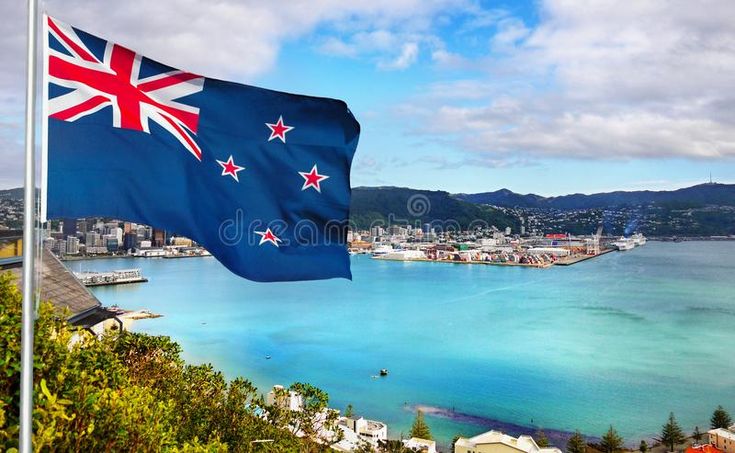
About New Zealand
New Zealand is an island country in the southwestern Pacific Ocean. The country geographically comprises two main landmasses ‒ that of the North and South Islands ‒ and numerous smaller islands. New Zealand is situated some 1,500 kilometres (900 mi) east of Australia across the Tasman Sea and roughly 1,000 kilometres (600 mi) south of the Pacific island nations of New Caledonia, Fiji, and Tonga. Because of its remoteness, it was one of the last lands to be settled by humans.
During its long isolation, New Zealand developed a distinctive biodiversity of animal, fungal and plant life. Most notable are the large number of unique bird species, many of which became extinct after the arrival of humans and introduced mammals. With a mild maritime climate, the land was mostly covered in forest. The country’s varied topography and its sharp mountain peaks owe much to the tectonic uplift of land and volcanic eruptions caused by the Pacific and Indo-Australian Plates clashing beneath the earth’s surface.
Higher Education System
The Education system in New Zealand is a three-tier model which includes primary schools, followed by secondary schools (high schools) and tertiary education at universities and/or polytechs. The academic year in New Zealand varies between institutions, but generally runs from late January until mid-December for primary schools, secondary schools, and polytechnics, and from late February until mid-November for universities.
In 2009, the Programme for International Student Assessment, published by the OECD, ranked New Zealand 7th best at science and reading in the world, and 13th in maths. The Education Index, published as part of the UN’s Human Development Index consistently ranks New Zealand among the highest in the world.
Post-compulsory education is regulated within the New Zealand Qualifications Framework, a unified system of national qualifications in schools, vocational education and training. Typically, a bachelor’s degree will take three years, and a further year of study will lead to an Honours degree. Not every degree follows this 3+1 pattern: there are some four year degrees (which may or may not be awarded with Honours), and some specialist bachelor’s degrees which take longer to complete. Typically, Honours may be awarded with first class, upper second class, lower second class or third class, but this can vary from degree to degree. A bachelor’s degree may be followed by a Master’s degree. A candidate who does not hold an Honours degree may be awarded a Master’s degree with honours: such a degree usually involves two years study, compared to one year for a Master’s degree for a candidate who does have an Honours degree. A candidate who has either a Master’s degree or a bachelor’s degree with Honours may proceed to a doctoral degree.
Entry to most universities was previously “open”, that is to say that one only needed to meet the minimum requirements in the school-leaving examinations (be it NCEA or Bursary). However, most courses at New Zealand universities now have selective admissions, where candidates have to fulfill additional requirements through their qualifications, notably with the University of Auckland offering the largest number of selective-entry courses. Mature students usually do not need to meet the academic criteria demanded of students who enter directly from secondary school.
Why NZ?
New Zealand has a lot to offer to international students besides quality education, we have outlined a few reason below for you as to why you would love to study & live in New Zealand:
- Moderate entry requirements & low cost of education,
- A vibrant, unique, safe and welcoming destination,
- High class living standards at reasonable cost,
- Experience working in an English speaking environment, a country where English is the main language used,
- A high quality learning experience, earn a degree recognised and valued by global employers,
- Study at one of New Zealand’s globally respected universities or tertiary institutions offering Broad range of study and research opportunities, a quality course that gives you value for your investment,
- Beautiful locations, Fantastic sports and adventure activities no matter what season, enjoy one of the greatest travel/tourism destinations in the world.
Why Choose Us
Canada is becoming the country of choice for students from all parts of the world. More than 130,000 students come to study in Canada every year. A Canadian degree, diploma or certificate is well-regarded in business, government and academic circles around the globe.
Profile & Academic Roadmapping
Profile Building & Extracurricular Planning
University Selection & Strategy
Scholarship & Financial Guidance
Application & SOP Mentorship
Parent & Decision Support
Cost
The cost of living in New Zealand is similar to that in Australia, and less than in United Kingdom. Tertiary students should budget for up to NZ$20,000 a year in living expenses.
- Tuition fees – between $12,000 – $ 29,000 per annum
- Accommodation and living costs – between $9,000 – 16,000 per annum
Here are some typical costs for living in NZ:
- Textbooks and stationery $500 a year
- Student ID card $20
- Students’ association membership $30
- Photocopy cards $100
- Bus fares $30 to $60 a week
- Coffee in student cafeteria $1 to $3 a cup
- Hot meals in cafeteria up to $7 for a one-course meal
- $100 to $200 a week for accommodation
- 50 cents to post a letter within New Zealand
- $4.45 for a Big Mac at McDonald’s
- Free local phone calls from a home phone
- $10 to $15 to go to the movies
- $1.60 for a 1-stage bus fare

Get Expert Guidance
Etiam semper cursus arcu vitae hendrerit. Cras gravida mollis pellentesque.
Phasellus vulputate urna quis lectus tincidunt tempor. Cras vel facilisis ex, at commodo dui. Cras non nisi gravida, sodales lacus vel, scelerisque justo.