Destinations
Study in Canada
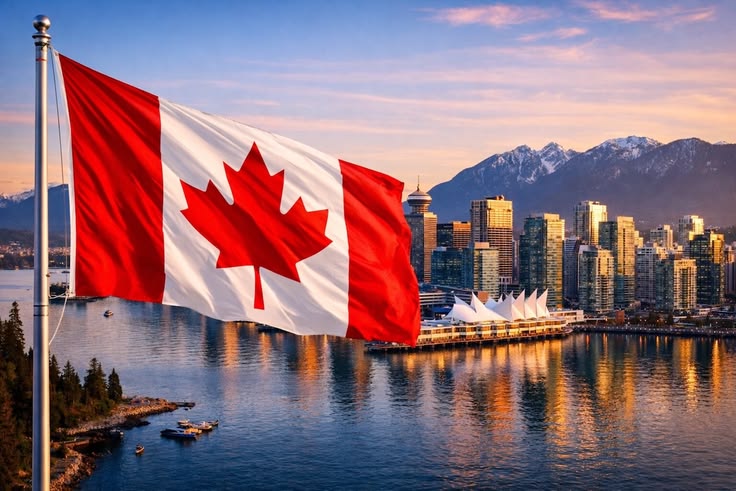
About Canada
Canada is a North American country consisting of ten provinces and three territories. Located in the northern part of the continent, it extends from the Atlantic Ocean in the east to the Pacific Ocean in the west and northward into the Arctic Ocean. It is the world’s second largest country by total area. Canada’s common border with the United States to the south and northwest is the longest in the world.
Higher Education System
In Canada, the constitutional responsibility for higher education rests with the provinces of Canada. The decision to assign responsibility for universities to the local legislatures, cemented in the British North America Act, 1867, which was renamed the Constitution Act in 1982, was contentious from its inception. The Act states “in and for each Province, the Legislature may exclusively make laws in relation to Education”. As a result of this constitutional arrangement, a distinctive system of education, including higher education, has evolved in each province. However, as the constitutional responsibility for Aboriginal Peoples with Treaty Status rests with the federal government of Canada under the Constitution Act of 1982, it is the federal government that is largely responsible for funding higher education opportunities for Aboriginal learners, whether in traditional post-secondary institutions or in settings that promote opportunities to pursue indigenous education.
- Number of universities in Canada: 90
- Number of full-time university students: 806,000
- Number of community colleges, technical institutes and CEGEPs: 175
- Number of full-time college students: 900,00
Why Choose Us
Canada is becoming the country of choice for students from all parts of the world. More than 130,000 students come to study in Canada every year. A Canadian degree, diploma or certificate is well-regarded in business, government and academic circles around the globe.
Profile & Academic Roadmapping
Profile Building & Extracurricular Planning
University Selection & Strategy
Scholarship & Financial Guidance
Application & SOP Mentorship
Parent & Decision Support
Cost
Canadian universities are cheapest among UK, USA, Australia. Average international tuition is around CA$15,000 per year.
| University tuition fees for full-time foreign students | ||
| Province | Undergraduate tuition fees (per academic year)* | Graduate tuition fees (per academic year)** |
| Newfoundland and Labrador | $8,780 | $1,896 – $3,549 |
| Prince Edward Island | $8,970 | $4,854 – $7,281 |
| Nova Scotia | $8,233 – $14,349 | $5,735 – $19,467 |
| New Brunswick | $7,843 – $12,810 | $7,260 – $9,384 |
| Quebec | $10,068 – $12,930 | $9,078 – $20,000 |
| Ontario | $6,900 – $16,800 | $5,650 – $26,764 |
| Manitoba | $5,573 – $8,283 | $4,170 – $7,937 |
| Saskatchewan | $8,489 – $11,482 | $2,000 – $7,078 |
| Alberta | $8,000 – $15,767 | $5,500 – $21,546 |
| British Columbia | $9,248 – $17,667 | $2,600 – $33,667 |
Source: Statistics Canada | ||
Here are some typical costs for living in Canada:
- Homestay accommodation with Meals: $400 – 800 per month
- Residence/dormitory Rooms: $400 – 900 per month
- Shared accommodations: $250 – 700 per month
- Average cost of a suite or apartment: $400 – 1,500 per month
- Bus Fare – One Way (local): $2.25 – 3.50
- Average Restaurant Meal: $8.00 – 30.00 per person
- Movie: $8.00 – 15.00
- Letter within Canada: $0.50
- International Postage (letter): $1.50

Get Expert Guidance
Etiam semper cursus arcu vitae hendrerit. Cras gravida mollis pellentesque.
Phasellus vulputate urna quis lectus tincidunt tempor. Cras vel facilisis ex, at commodo dui. Cras non nisi gravida, sodales lacus vel, scelerisque justo.